Hemexa
Guide

Biomarker testing in Australia

Biomarker testing measures biological markers in your blood (and sometimes urine) to assess metabolism, hormones, nutrients, inflammation, and organ function. In Australia, tests run through NATA-accredited pathology labs. You can access biomarker testing via Medicare-funded GP orders, pay-per-panel private providers, or annual membership programs that coordinate panels and retesting.

This guide explains how Australians access biomarker testing, what common panels include, and how Medicare, pay-per-panel, and membership options differ. Hemexa is one membership path for people who want coordinated baseline and retest panels with a health-system dashboard.

Your annual baseline includes 60+ signature markers (exact count depends on sex; typically 59–63 measured). Fast-moving markers are tested again on your included six-month retest.

See all 60+ markers
GP-reviewed requestsLaverty collection nationwideIncluded six-month retest
Basics

What are biomarkers?

Biomarkers are measurable substances in blood that reflect how your body is functioning. A single marker (like fasting glucose) is one data point. A panel groups related markers (metabolic, thyroid, lipids) so you and your clinician can see patterns, not isolated numbers.

Blood biomarkers vs other tests

Most preventative biomarker programs focus on blood panels. Some add urine, saliva hormones, or wearables (for example continuous glucose monitors). Blood remains the standard for lipids, liver enzymes, thyroid, iron, and most vitamins.

Reference ranges are population-based

Australian labs publish age- and sex-specific reference ranges aligned with RCPA guidance. "In range" on one day does not always mean optimal for your goals. Repeat testing shows whether values are stable, improving, or drifting.

Panels vs one-off markers

Ordering single markers ad hoc is common with a GP referral. Preventative memberships use structured panels so each test compares the same markers over time. That consistency matters when you track trends across years.

Why it matters

Why Australians get biomarker tests

Medicare covers clinically indicated tests ordered by your GP. Growing interest in longevity, metabolic health, and hormone balance drives private preventative panels beyond standard screening.

Baseline before problems show up

Many metabolic and nutrient markers shift gradually. A structured baseline in your 30s or 40s gives you a reference point before symptoms appear, especially if you have family history of diabetes, heart disease, or thyroid issues.

Measure lifestyle changes

Diet, exercise, sleep, and supplements affect measurable markers (lipids, glucose, vitamin D, iron). Retesting every six to twelve months shows whether your changes are working, instead of guessing.

Prepare for clinician conversations

Private panels do not replace your GP. They give you organised data to discuss: whether to adjust medication, investigate fatigue, or order follow-up Medicare tests when something is out of range.

Australian context

How biomarker testing works in Australia

All commercial pathology in Australia is delivered through accredited laboratory networks. Collection is usually at a local centre; results arrive as PDF and sometimes through a patient portal.

Medicare-funded testing

Your GP orders tests when clinically appropriate. Medicare covers standard screening and investigation. Scope is symptom- and history-driven, not a full preventative longevity panel. Wait times and which markers are funded depend on clinical criteria.

Private preventative panels

You pay out of pocket for broader panels: metabolic markers, hormones, nutrients, and inflammation tests Medicare may not fund without indication. Providers include direct-to-consumer labs, telehealth clinics, and membership platforms.

Pathology networks

Laverty, 4Cyte Pathology, Sullivan Nicolaides Pathology, Australian Clinical Labs, and QML Pathology are among the major networks. The same marker can be run at different labs; report layout and reference ranges should stay RCPA-aligned.

GP review and referrals

Australian regulations require a requesting practitioner for most pathology. Direct-to-consumer brands either include GP review in the workflow or ask you to bring a referral. Confirm who signs the request and who explains abnormal results.

Common panels

Biomarker categories Australians test most

Preventative panels combine categories below. Exact markers depend on the provider, your sex, and clinical context. Hemexa baseline spans all eight areas across 60+ signature markers.

CategoryExample markersWhy it matters
Metabolic healthFasting glucose, HbA1c, insulin, HOMA-IREarly signals for blood sugar regulation and type 2 diabetes risk before symptoms appear
Lipids and cardiovascularTotal cholesterol, LDL, HDL, triglycerides, ApoB (where offered)Cardiovascular risk assessment beyond a single cholesterol number
ThyroidTSH, free T4, free T3, thyroid antibodiesEnergy, weight, mood, and metabolism; subclinical issues are common
Sex hormonesTestosterone, estradiol, SHBG, LH, FSH (sex-specific panels)Fertility, energy, body composition, and perimenopause or andropause context
Nutrients and ironVitamin D, B12, folate, ferritin, iron studiesFatigue, immunity, and performance; deficiencies are frequent and treatable
Liver and kidneyALT, AST, GGT, creatinine, eGFR, ureaMedication effects, alcohol, metabolic stress, and hydration status
Inflammation and immunityCRP, ESR, full blood count differentialsChronic low-grade inflammation links to cardiometabolic risk
Other preventative markersUric acid, cortisol (where indicated), PSA (males)Context-specific screening your clinician may recommend based on age and history
Your options

Four ways to get biomarker testing in Australia

Most people use more than one path over time: Medicare for investigation, private panels for expanded screening, and sometimes a membership for structured retesting. Compare cost, panel breadth, and who coordinates follow-up.

ApproachBest forTypical costLimitations
GP and MedicareSymptom-driven investigation and standard screeningLow or no out-of-pocket when bulk-billedNot designed as a comprehensive preventative panel; marker set depends on clinical indication
Pay-per-panel (e.g. MediTests, i-screen)One-off private panels without annual commitmentRoughly $50 to $400+ per panel depending on markersYou coordinate each test and retest yourself; limited longitudinal dashboard
Wellness memberships (e.g. Vively, Everlab)Structured programs with varying depth of blood workFrom ~$99 baseline to $799+ annual programsPanel size, retest cadence, and dashboard depth vary widely by provider
Blood intelligence membership (e.g. Hemexa)Coordinated baseline, six-month retest, and trend dashboardAU$799/year (billed annually)Paid membership; panels follow the program rather than fully custom ad-hoc orders
Buying guide

What to look for in biomarker testing

Panel breadth vs your goals

Match the panel to what you want to learn. A basic metabolic screen differs from a 60+ marker preventative baseline covering hormones, nutrients, and inflammation.

Retest cadence

One test is a snapshot. Metabolic and lipid markers often benefit from a six-month follow-up. Confirm whether retesting is included or extra.

Australian reference ranges

US-imported products sometimes use US ranges. Australian reports should use RCPA-aligned ranges by age and sex.

Who requests and reviews results

Know whether a registered Australian GP is in the loop for requests and abnormal flags. Hemexa includes GP review in the testing workflow.

Collection convenience

Nationwide collection networks (for example Laverty) reduce friction if you travel or move. Check centre finder coverage in your state.

Longitudinal tracking

Storing PDFs is not the same as trend analysis. If you plan to retest, choose a provider with dashboard or import tools. See our blood test tracker guide for tracking-only options.

Related guides: preventative blood testing · blood test tracking

How Hemexa fits

Coordinated biomarker testing in one membership

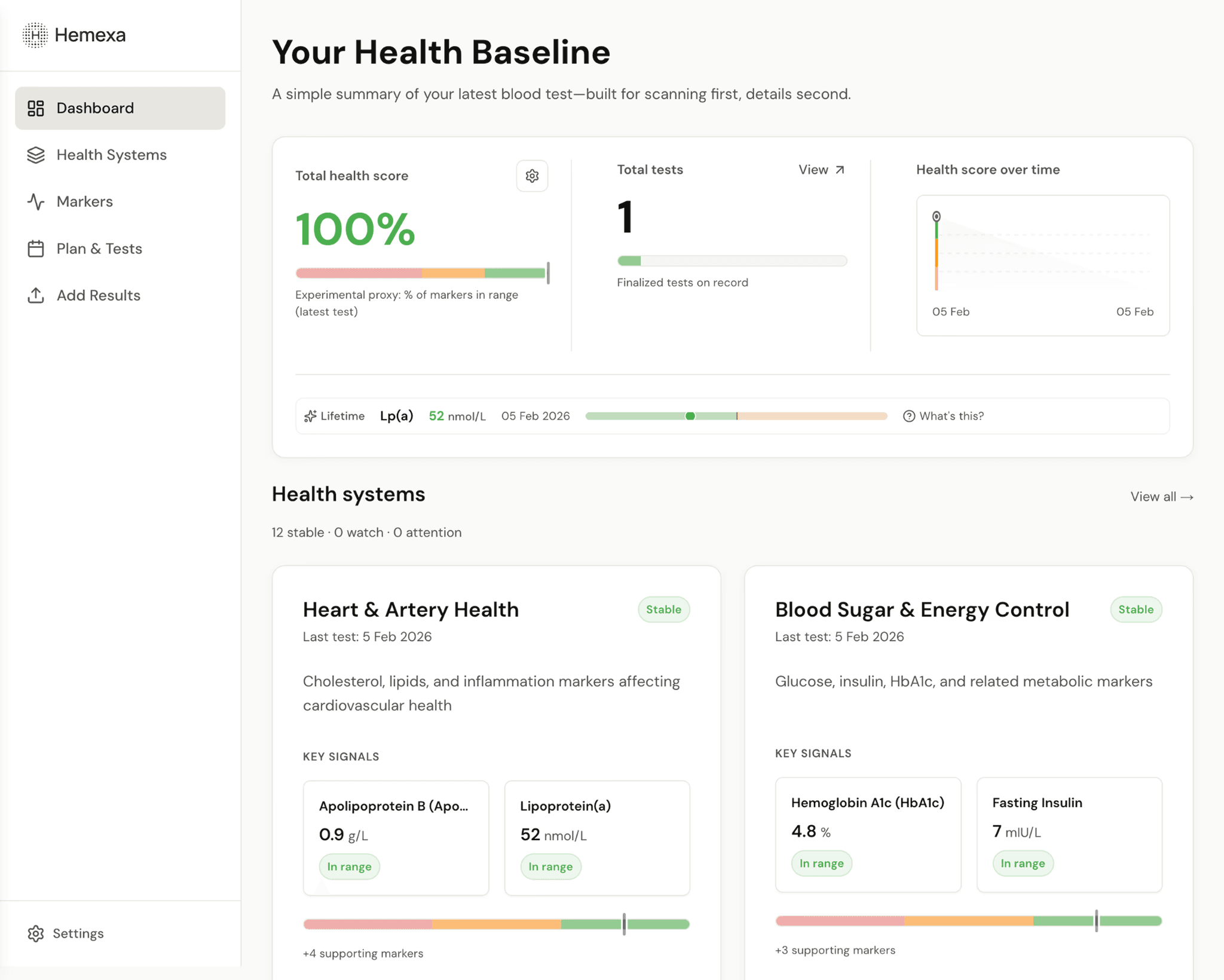
Hemexa is a blood intelligence membership: GP-reviewed requests, Laverty collection, structured panels, an included six-month retest, and a dashboard that turns results into health-system scores and a personalised plan.

60+ signature markers on baseline

Annual membership includes a comprehensive baseline panel: 60+ signature markers across 16 health-system categories (heart, metabolism, thyroid, hormones, nutrients, and more). A small number are sex-specific.

Included six-month retest

Fast-moving markers (glucose, lipids, inflammation) get a structured mid-year retest so you see direction, not just a yearly snapshot.

GP-reviewed requests and Laverty collection

Hemexa coordinates GP-reviewed pathology requests and collection through the Laverty network nationwide. Results flow into your member dashboard automatically.

Health-system scores and personalised plan

Each panel generates health-system summaries, per-marker trends, supplement insights, and plain-language sections to discuss with your clinician.

Hemexa dashboard showing health systems, scores, and biomarker trends
Decision helper

Which testing path fits you?

Choose GP and Medicare if

  • You have symptoms or a condition that needs investigation
  • You want lowest out-of-pocket cost for clinically indicated tests
  • Your doctor has already recommended specific markers

Choose pay-per-panel if

  • You want a one-off expanded panel without annual membership
  • You are experimenting with a specific marker set before committing to a program
  • You are comfortable booking collection and tracking results yourself

Choose Hemexa membership if

  • You want a wide preventative baseline with an included six-month retest
  • You want health-system dashboard, trends, and a personalised plan tied to your blood
  • You prefer one membership that coordinates GP review, collection, and retesting
FAQ

Common questions about biomarker testing in Australia

What is biomarker testing?
Biomarker testing measures substances in blood (and sometimes other samples) that reflect health status: metabolism, hormones, nutrients, inflammation, and organ function. In Australia, tests are processed by NATA-accredited pathology laboratories and reported with reference ranges for your age and sex.
How much does biomarker testing cost in Australia?
Medicare-funded GP tests are often bulk-billed with no out-of-pocket cost when clinically indicated. Private pay-per-panel tests range from roughly $50 for narrow panels to $400+ for comprehensive sets. Annual membership programs (including Hemexa at AU$799/year) bundle coordinated panels, retesting, and dashboard features.
Can I get biomarker testing without a GP in Australia?
Most pathology requires an authorised requesting practitioner. Some direct-to-consumer services include telehealth GP review in the purchase. Others ask you to obtain a referral. Hemexa coordinates GP-reviewed requests as part of membership.
What biomarkers should I test for preventative health?
Common preventative sets include metabolic markers (glucose, HbA1c, insulin), lipids, thyroid function, iron and key vitamins, liver and kidney enzymes, and sex hormones where relevant. Hemexa baseline covers 60+ signature markers across 16 categories. Your doctor can tailor additional Medicare-funded tests to your history.
How is biomarker testing different from a standard blood test?
A standard Medicare blood test targets clinical questions your GP identifies. Preventative biomarker panels are broader, often private, and designed for baseline and trend tracking before disease. The lab process is the same; the scope and who pays differ.
Which pathology labs do Australians use for biomarker testing?
Major networks include Laverty, 4Cyte Pathology, Sullivan Nicolaides Pathology, Australian Clinical Labs, and QML Pathology. Hemexa coordinates collection through Laverty nationwide. Other providers may use different networks depending on location.
How often should I repeat biomarker tests?
Annual testing is a common minimum for preventative panels. Markers that change quickly (glucose, lipids, some hormones) benefit from a six-month check. Hemexa includes a six-month retest in membership. Your clinician may recommend a different schedule based on results.
Is private biomarker testing covered by Medicare?
Medicare covers tests your GP orders when they meet clinical criteria. Broad preventative panels ordered for wellness or longevity are usually private and paid out of pocket. Some markers may be partially Medicare-eligible if there is a clinical indication.
What is the best biomarker testing service in Australia?
It depends on your goal. GP and Medicare suit investigation and standard screening. Pay-per-panel services suit one-off expanded tests. Membership platforms like Hemexa suit people who want coordinated baseline and retest panels, GP-reviewed requests, and a longitudinal dashboard. Compare panel size, retest inclusion, and tracking before you decide.
Does Hemexa replace my doctor?
No. Hemexa organises pathology, trends, and discussion-ready summaries. Results are reviewed by a registered Australian GP as part of the testing workflow. Diagnosis and treatment decisions stay with you and your clinician.

More guides

Tracking guide

Blood test tracker Australia

How Australians track pathology PDFs over time: upload apps, spreadsheets, and membership platforms that include coordinated testing and retesting.

Read guide →

Testing guide

Preventative blood test Australia

How preventative blood testing works in Australia: Medicare vs private panels, what markers to include, costs, GP-reviewed requests, and retest cadence.

Read guide →

Longevity guide

Longevity blood test Australia

What longevity blood tests measure, which biomarkers to include, how Australian options compare to Function Health, and how to choose a panel or membership.

Read guide →

Biomarker guide

ApoB test Australia

What Apolipoprotein B measures, ApoB vs LDL cholesterol, typical costs and Medicare coverage in Australia, reference ranges, and how to order through a GP or private panel.

Read guide →

Biomarker guide

Lipoprotein(a) test Australia

What Lp(a) measures, why it is a genetically determined cardiovascular risk factor, typical costs and Medicare coverage in Australia, reference ranges in nmol/L, and one-time testing guidance.

Read guide →

Biomarker guide

Fasting insulin test Australia

Fasting insulin testing in Australia: insulin resistance screening, reference ranges, HOMA-IR, Medicare vs private costs, fasting requirements, and how to order.

Read guide →

Biomarker guide

HOMA-IR Australia

What HOMA-IR measures, how it is calculated from fasting glucose and insulin, optimal ranges, Medicare vs private testing, and how to track insulin resistance over time.

Read guide →

Biomarker guide

Vitamin D blood test Australia

25-hydroxyvitamin D testing in Australia: deficiency ranges in nmol/L, Medicare vs private costs, when to test, supplementation, and how to order.

Read guide →

Biomarker guide

hs-CRP test Australia

High-sensitivity CRP testing in Australia: inflammation and cardiovascular risk, hs-CRP vs standard CRP, typical costs, Medicare coverage, reference ranges in mg/L, and when to retest.

Read guide →

Biomarker guide

Testosterone blood test Australia

Testosterone blood testing in Australia: total vs free testosterone, SHBG, morning collection, reference ranges in nmol/L, Medicare vs private costs, TRT monitoring, and how to order.

Read guide →

Biomarker guide

Thyroid blood test Australia

What TSH, free T4, and free T3 measure, typical costs and Medicare coverage in Australia, reference ranges, antibody testing, and how to order through a GP or private panel.

Read guide →

View all guides

Ready for structured biomarker testing?

Claim a founding spot and we will send next steps when onboarding opens. Or browse all 60+ signature markers before you decide.

All guides