Hemexa
Guide

Testosterone blood testing in Australia

A testosterone blood test measures androgen levels in serum, most often as total testosterone with sex hormone-binding globulin (SHBG) to estimate bioavailable or calculated free testosterone. In Australia it is a standard NATA-accredited assay, but Medicare usually only funds it when clinically indicated. For preventative baselines, menopause workups, PCOS, or TRT monitoring, it is commonly ordered as a private add-on or part of a comprehensive hormone panel.

Hemexa includes total testosterone, calculated free testosterone, SHBG, and oestradiol on the annual signature panel with retest and trend tracking. This guide explains how testosterone testing works in Australia, when morning collection matters, and how to interpret results with your clinician.

Your annual baseline includes 60+ signature markers (exact count depends on sex; typically 59–63 measured). Fast-moving markers are tested again on your included six-month retest.

See all 60+ markers
Morning collectionGP-reviewed requestsIncluded six-month retest
Why it matters

Why measure testosterone?

Testosterone affects energy, muscle, mood, libido, bone density, and metabolic health in both men and women. Symptoms alone are unreliable. A morning blood test with the right panel gives objective data your clinician can interpret alongside SHBG and related hormones.

Symptoms overlap with many conditions

Fatigue, low libido, brain fog, and poor recovery can reflect sleep debt, thyroid issues, depression, or insulin resistance. Testosterone testing helps separate androgen deficiency from other causes when symptoms persist.

Total testosterone is not the full picture

Most testosterone in blood is bound to SHBG and albumin. Only a fraction is free and biologically active. Australian clinicians often order total testosterone plus SHBG, then calculate free testosterone for a more accurate read.

Trends matter for treatment decisions

A single low result should be confirmed on a repeat morning draw before starting testosterone replacement therapy (TRT). Tracking testosterone over months shows whether lifestyle changes or treatment are working.

Marker comparison

Total testosterone vs free testosterone, SHBG, and LH

Australian hormone panels vary. Understanding which markers belong together prevents ordering total testosterone alone and misinterpreting the result.

MarkerWhat it measuresMedicareBest for
Total testosteroneAll testosterone in serum (bound plus free)Sometimes funded when clinically indicatedFirst-line androgen screening in men and women
SHBGProtein that binds testosterone and oestradiolOften private on preventative panelsCalculating free testosterone; context for metabolic health
Calculated free testosteroneEstimated bioactive fraction from total T, SHBG, albuminDerived or reported by lab; not always a separate itemWhen total T is borderline or SHBG is abnormal
LH and FSHPituitary signals to the gonadsFunded when infertility or hypogonadism is suspectedDistinguishing primary vs secondary hypogonadism
Oestradiol (E2)Primary oestrogen; relevant to aromatisation of testosteroneVaries by indicationMen on TRT, perimenopause, and complete hormone context
Australian context

How testosterone testing works in Australia

Testosterone is a routine pathology assay at Laverty, 4Cyte, Sullivan Nicolaides, Australian Clinical Labs, QML, and other NATA-accredited networks. Collection timing and panel design matter more than the test itself.

Morning collection is essential

Testosterone follows a diurnal rhythm, highest in early morning. Australian guidelines and labs recommend collection before 10 am, ideally between 7 and 9 am, after an overnight fast when combined with metabolic markers.

Medicare vs private preventative testing

Medicare may fund testosterone when a GP documents symptoms of androgen deficiency, infertility, or pituitary disease. Broad hormone screening for asymptomatic adults is typically private, often $40 to $120 for testosterone and SHBG or bundled in panels from $100 to $400+.

Australian units: nmol/L

Australian labs report total testosterone in nmol/L. US results often use ng/dL. Do not compare raw numbers across countries without conversion (multiply ng/dL by 0.0347 for nmol/L). Use the reference interval on your local lab report.

Who should test

Who should consider a testosterone blood test?

Testosterone testing is relevant for men and women in different clinical contexts, from hypogonadism workups to preventative baselines. Discuss timing and panel design with your GP or endocrinologist.

Men with persistent hypogonadal symptoms

Reduced libido, erectile dysfunction, loss of morning erections, fatigue, depressed mood, loss of muscle mass, or increased body fat despite healthy habits. Confirm with two morning tests before treatment.

Men considering or on TRT

Baseline testosterone, SHBG, haematocrit, PSA, and lipids before starting. Retest testosterone every 3 to 6 months after dose changes, per Endocrine Society monitoring guidance.

Women with PCOS or androgen excess signs

Acne, hirsutism, irregular cycles, or infertility may warrant total testosterone and SHBG alongside glucose, insulin, and ovarian ultrasound as clinically indicated.

Perimenopause and menopause

Declining oestrogen and relative androgen balance affect energy, libido, and body composition. Testosterone may be checked as part of a broader hormone panel with oestradiol and thyroid markers.

Preventative and longevity baselines

Healthy adults in preventative programs often include testosterone, SHBG, and oestradiol on an annual panel to establish a personal baseline before symptoms appear.

Athletes and overtraining

Chronic energy deficit, overtraining, and low body fat can suppress testosterone in men and women. Tracking trends helps distinguish training stress from primary hormone disorders.

How to order

Four ways Australians get a testosterone test

From a clinically indicated GP screen to a comprehensive membership with hormone trend tracking. Costs and panel breadth vary.

ApproachBest forTypical costTestosterone included?
GP hormone screen (Medicare)Symptomatic hypogonadism or infertility workupBulk-billed or low gap when clinically indicatedTotal testosterone; SHBG may need private add-on
GP-ordered private hormone panelMorning testosterone, SHBG, and related markers~$80 to $200 out of pocketYes; often total T, SHBG, LH, FSH, oestradiol
Pay-per-panel services (e.g. MediTests, i-screen)One-off men's health or hormone panels~$100 to $350+ depending on panelOften included in male or hormone health panels
Membership platforms (e.g. Hemexa)Annual testosterone baseline with retest and trend tracking~$799/year (full membership)Yes; total and calculated free testosterone, SHBG, oestradiol on 60+ signature markers
Results

Understanding your testosterone result

Reference ranges differ by lab, age, and sex. Interpretation should always involve your clinician. These are general Australian reference points, not personal medical advice.

Adult men: typical lab ranges

Many Australian labs use roughly 10 to 35 nmol/L for adult male total testosterone, with age-adjusted lower limits. Symptomatic men with repeated morning levels below ~10 nmol/L often warrant endocrine review. Optimal preventative targets are discussed individually.

Adult women: lower but clinically important

Women produce testosterone in the ovaries and adrenal glands. Typical total testosterone is roughly 0.5 to 2.5 nmol/L. Elevated levels may suggest PCOS or other androgen excess; low levels can affect libido, bone health, and energy, especially around menopause.

SHBG changes the interpretation

High SHBG (common with ageing, hyperthyroidism, liver disease, low insulin) can lower free testosterone despite normal total T. Low SHBG (insulin resistance, obesity) can mask androgen excess. Always read total testosterone with SHBG.

Confirm before treating

Endocrine guidelines recommend repeating a low morning total testosterone on a separate day before diagnosing hypogonadism or starting TRT. Illness, poor sleep, and recent exercise can temporarily suppress levels.

What moves testosterone

What affects testosterone levels?

Testosterone responds to sleep, body composition, training, stress, and medications. These are levers clinicians discuss after results, not substitutes for personalised medical advice.

Sleep and circadian rhythm

Poor sleep and shift work blunt the morning testosterone peak. Consistent sleep timing and 7 to 9 hours support healthier androgen profiles.

Resistance training and body fat

Strength training and maintaining healthy body composition support testosterone in men. Excess visceral fat lowers testosterone and raises aromatisation to oestradiol.

Chronic stress and alcohol

Sustained cortisol elevation and heavy alcohol use suppress testosterone production. Addressing stress load and alcohol intake often improves levels over 8 to 12 weeks.

Medications and medical conditions

Opioids, glucocorticoids, and some psychiatric medications lower testosterone. Obesity, type 2 diabetes, thyroid disorders, and pituitary disease also affect results. Share your full medication list with your clinician.

Ordering checklist

What to check before you book a testosterone test

Book a morning draw before 10 am

Testosterone peaks in early morning. Afternoon tests can look falsely low. Fast 8 to 12 hours if combined with glucose, insulin, or lipids on the same request.

Order total testosterone plus SHBG

Total testosterone alone can mislead when SHBG is high or low. Most Australian preventative panels include both, with calculated free testosterone reported by the lab or your results platform.

Repeat low results before TRT

A single borderline or low reading is not enough to start testosterone replacement. Guidelines support confirming on a separate morning when clinically appropriate.

Add LH, FSH, and oestradiol when indicated

If hypogonadism is suspected, pituitary markers distinguish primary from secondary causes. Men on or considering TRT benefit from baseline oestradiol and PSA with clinician guidance.

Use Australian nmol/L reference ranges

Compare results to the interval on your Australian lab report. Overseas ng/dL cut-offs require conversion and may not match local assay methods.

Plan a retest cadence

Annual baselines suit preventative programs. On TRT or after major lifestyle changes, retest every 3 to 6 months until stable, then as your endocrinologist advises.

How Hemexa fits

Testosterone as part of a tracked hormone panel

Hemexa includes total testosterone, calculated free testosterone, SHBG, and oestradiol on the annual signature panel with structured retests and hormones health-system scoring.

Testosterone on the annual signature panel

Hemexa includes total testosterone, calculated free testosterone, SHBG, and oestradiol on the annual baseline panel as part of 60+ signature markers across hormones and stress markers. Sex-specific markers adjust the exact panel composition.

Retest on structured panels

Hormone markers that move with lifestyle, weight, and treatment are included on the six-month retest where clinically appropriate, so you can track trends rather than rely on one morning snapshot.

Hormones and stress health-system score

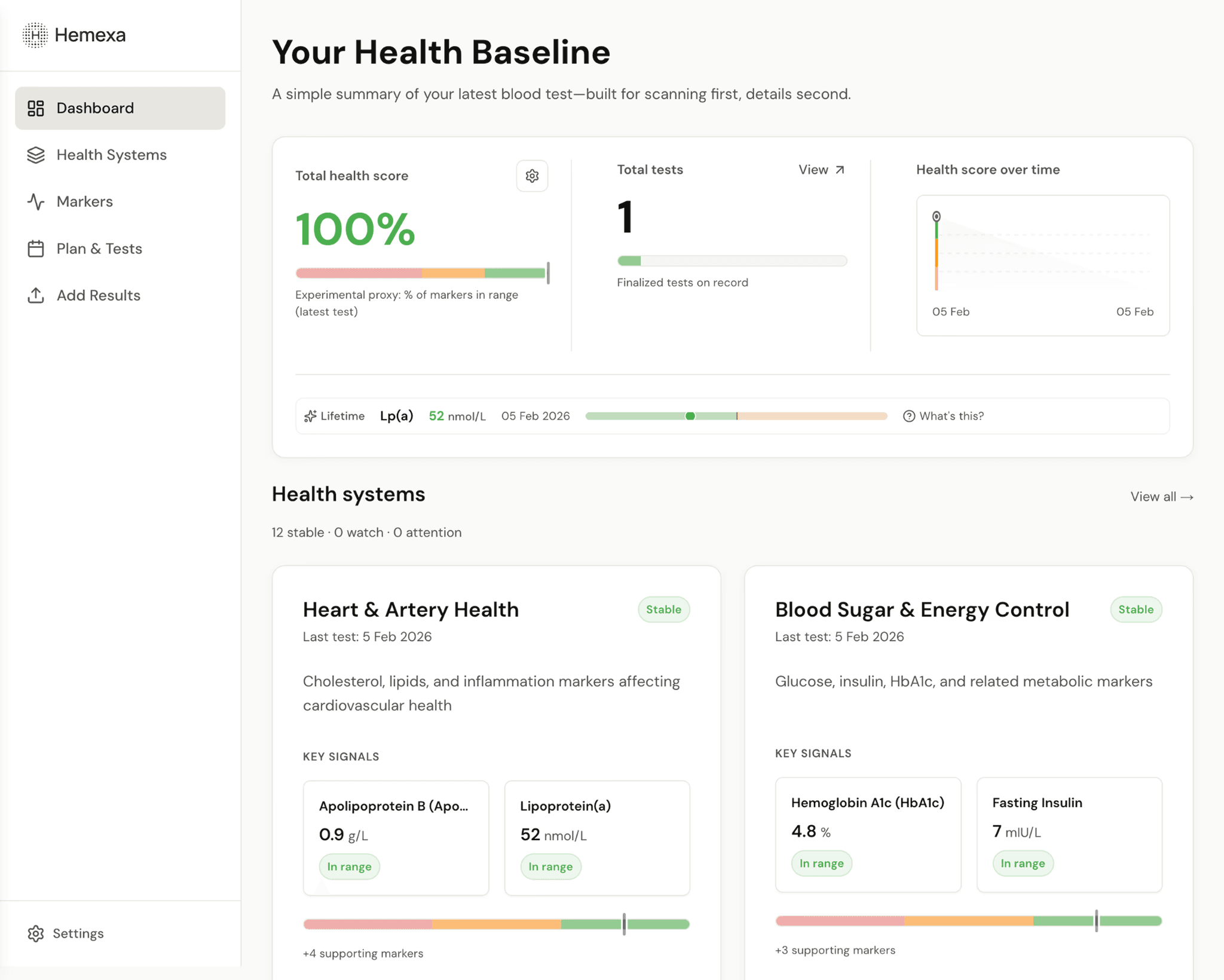
Testosterone feeds into the hormones and stress health-system dashboard with per-marker trend lines after each coordinated panel.

GP-reviewed requests and Laverty collection

Hemexa coordinates authorised pathology requests and nationwide morning collection through Laverty. No ad-hoc hormone add-on shopping or manual spreadsheet tracking.

Hemexa dashboard showing hormones health system and testosterone trends
Decision helper

GP screen or membership with hormones included?

Choose GP or pay-per-panel if

  • You have clear symptoms and your GP will bulk-bill a clinically indicated hormone screen
  • You need a one-off morning testosterone test and will track the PDF yourself
  • You want testosterone testing without a broader preventative membership

Choose Hemexa membership if

  • You want testosterone, SHBG, and oestradiol on a comprehensive annual panel with an included six-month retest
  • You want hormone markers trended alongside thyroid, metabolic, and inflammation markers in one dashboard
  • You want one membership that coordinates GP-reviewed requests, Laverty collection, and longitudinal tracking

Building a full hormone picture? Read our preventative blood test guide or longevity blood test guide.

FAQ

Common questions about testosterone testing in Australia

What is a testosterone blood test?
A testosterone blood test measures the concentration of testosterone in your serum, usually as total testosterone in nmol/L. Australian clinicians often add SHBG to estimate calculated free testosterone, the biologically active fraction. It is a standard pathology assay available through GP-ordered or private hormone panels.
How much does a testosterone test cost in Australia?
A standalone private total testosterone test typically costs $40 to $80 out of pocket. Testosterone plus SHBG and related hormones often runs $80 to $200. Comprehensive hormone or men's health panels range from $100 to $350+. Membership platforms that include testosterone among 70+ markers start around AU$799 per year. Medicare may fund testing when clinically indicated.
Is testosterone testing covered by Medicare in Australia?
Medicare may fund testosterone when a GP documents appropriate clinical indications such as suspected hypogonadism, infertility, or pituitary disorders. Routine hormone screening for asymptomatic preventative purposes is usually private. SHBG and broad panels are often out of pocket.
What is a normal testosterone level in Australia?
Australian labs report total testosterone in nmol/L with sex-specific reference ranges. Adult men commonly fall roughly between 10 and 35 nmol/L, varying by age and laboratory. Adult women typically range roughly 0.5 to 2.5 nmol/L. Interpretation requires symptoms, SHBG, and clinical context. Use the reference interval on your Australian lab report.
When should I take a testosterone blood test?
Book a morning blood draw before 10 am, ideally between 7 and 9 am, when testosterone is highest. Fast if your panel includes glucose, insulin, or lipids. Avoid testing during acute illness. Repeat low results on a separate morning before starting treatment.
What is the difference between total and free testosterone?
Total testosterone measures all testosterone in blood, including protein-bound fractions. Free testosterone is the unbound, biologically active portion. Most Australian labs calculate free testosterone from total testosterone, SHBG, and albumin rather than measuring it directly. SHBG context is essential for accurate interpretation.
Do women need testosterone testing?
Yes, in the right clinical context. Women produce testosterone and it affects libido, energy, muscle, and bone health. Elevated testosterone may indicate PCOS or other androgen excess. Low levels can matter around menopause. Reference ranges are much lower than for men.
How do I get a testosterone test in Australia?
You need an authorised pathology request from a registered GP or clinician. Options include a Medicare-funded request when clinically indicated, a private hormone panel through your GP, pay-per-panel services with GP review, or a membership like Hemexa that includes testosterone on the annual panel. Blood is collected at Laverty, 4Cyte, or other pathology centres nationwide.
How often should testosterone be tested?
Annual morning testing suits most preventative programs. Men on TRT typically retest every 3 to 6 months after dose changes until stable, then every 6 to 12 months per endocrine guidelines. Retest 3 to 6 months after significant weight, training, or sleep changes if tracking lifestyle impact.
Can lifestyle changes raise testosterone?
In men with obesity, poor sleep, or sedentary habits, weight loss, resistance training, improved sleep, and reduced alcohol often raise testosterone over weeks to months. Results vary. Primary hypogonadism and pituitary disorders need medical evaluation, not lifestyle alone.
What blood tests should I get with testosterone?
A useful panel often includes total testosterone, SHBG, calculated free testosterone, LH, FSH, and oestradiol as clinically indicated. Men considering TRT also need PSA, haematocrit, and lipids per guideline. Pair with thyroid, glucose, and insulin markers for a complete metabolic picture.
Does Hemexa include testosterone testing?
Yes. Total testosterone, calculated free testosterone, SHBG, and oestradiol are included on the Hemexa annual signature panel as part of 60+ signature markers across 16 health-system categories. Results appear in the hormones and stress dashboard with trend tracking on structured retests. Membership is AU$799/year with GP-reviewed requests and Laverty collection.

More guides

Testing guide

Biomarker testing Australia

How biomarker testing works in Australia: Medicare vs private panels, common marker categories, pathology networks, and membership options with retesting.

Read guide →

Tracking guide

Blood test tracker Australia

How Australians track pathology PDFs over time: upload apps, spreadsheets, and membership platforms that include coordinated testing and retesting.

Read guide →

Testing guide

Preventative blood test Australia

How preventative blood testing works in Australia: Medicare vs private panels, what markers to include, costs, GP-reviewed requests, and retest cadence.

Read guide →

Longevity guide

Longevity blood test Australia

What longevity blood tests measure, which biomarkers to include, how Australian options compare to Function Health, and how to choose a panel or membership.

Read guide →

Biomarker guide

ApoB test Australia

What Apolipoprotein B measures, ApoB vs LDL cholesterol, typical costs and Medicare coverage in Australia, reference ranges, and how to order through a GP or private panel.

Read guide →

Biomarker guide

Lipoprotein(a) test Australia

What Lp(a) measures, why it is a genetically determined cardiovascular risk factor, typical costs and Medicare coverage in Australia, reference ranges in nmol/L, and one-time testing guidance.

Read guide →

Biomarker guide

Fasting insulin test Australia

Fasting insulin testing in Australia: insulin resistance screening, reference ranges, HOMA-IR, Medicare vs private costs, fasting requirements, and how to order.

Read guide →

Biomarker guide

HOMA-IR Australia

What HOMA-IR measures, how it is calculated from fasting glucose and insulin, optimal ranges, Medicare vs private testing, and how to track insulin resistance over time.

Read guide →

Biomarker guide

Vitamin D blood test Australia

25-hydroxyvitamin D testing in Australia: deficiency ranges in nmol/L, Medicare vs private costs, when to test, supplementation, and how to order.

Read guide →

Biomarker guide

hs-CRP test Australia

High-sensitivity CRP testing in Australia: inflammation and cardiovascular risk, hs-CRP vs standard CRP, typical costs, Medicare coverage, reference ranges in mg/L, and when to retest.

Read guide →

Biomarker guide

Thyroid blood test Australia

What TSH, free T4, and free T3 measure, typical costs and Medicare coverage in Australia, reference ranges, antibody testing, and how to order through a GP or private panel.

Read guide →

View all guides

Track your hormone baseline

Claim a founding spot and we will send next steps when onboarding opens. Or browse all 60+ signature markers before you decide.

All guides